How to plan a crypto portfolio for the next cycle and target millions without blowing up your account
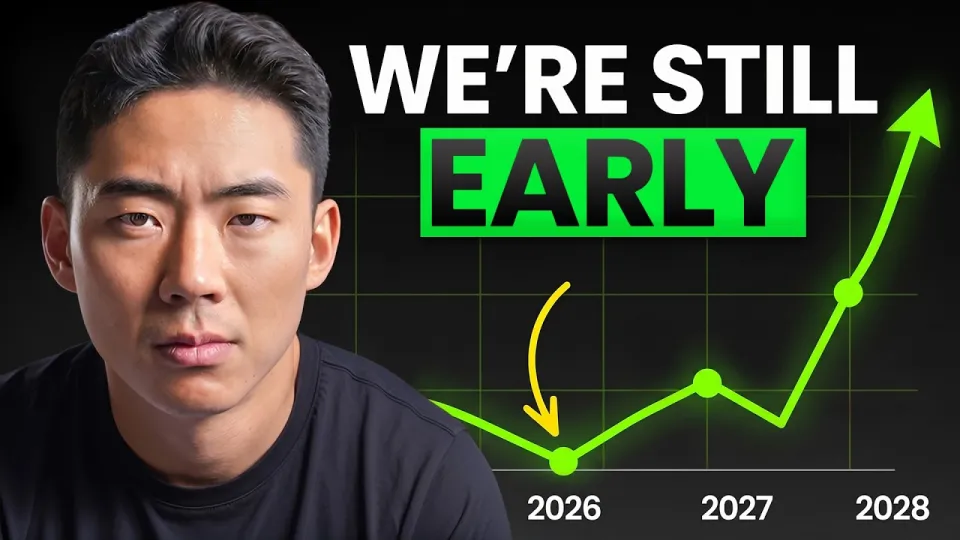
Video: my plan to make millions in crypto 2027
You can order the same kind of articles for your own video to boost it on YouTube and Google. Just message the Telegram bot @sat_sit_bot. It writes articles around your video, embeds the video and publishes them on popular niche websites (no ads). Try it free: 50 articles on us.
· based on the channel Brian Jung
A crypto plan for the next cycle works like a business plan, not a bet: define a core Bitcoin and Ethereum position, size a small basket of narrative altcoins, keep a cash reserve, and write down the exit rules before the market tests them. Brian Jung's breakdown lays out exactly that structure, and the Kaizen Pro waitlist is where he publishes the detailed research behind it.
The difference between investors who compound through a cycle and those who round-trip their gains is rarely the coin they picked. It is position sizing, the number of positions, and whether they had a plan for the day a 40% drawdown arrived. This guide turns the framework into something you can execute.
Why the crypto bull case still rests on flows, not narratives
The bullish case for crypto is built on capital flows and supply mechanics, and narratives only decide where that capital lands first. Three forces matter most.
- Institutional access. Spot Bitcoin and Ethereum ETFs turned crypto into an allocation line item for advisors who never touched an exchange. Once the plumbing exists, flows become sticky and less reflexive than retail leverage.
- Regulatory clarity. Market-structure legislation in the US is the single biggest swing factor. Clear rules on which tokens are securities would let banks, brokers and payment companies list products without legal exposure. A rejection or a delay is not automatically bearish, though: it keeps the market decentralized and removes the risk of a handful of banks owning the rails.
- Supply discipline. Post-halving issuance, staking lockups and exchange balances that keep drifting lower all reduce the float available to buyers. Thin float plus steady demand is what turns a good narrative into a violent price move.
None of these guarantee a number. They describe a market where the base rate for a multi-year uptrend is higher than in 2022, and where the cost of being completely out is asymmetric.
The narratives driving the next crypto cycle
Capital in a crypto cycle rotates through a handful of themes, and the winners are usually the sectors that already have revenue before the narrative peaks. The themes worth tracking:
- Bitcoin as institutional collateral. ETFs, corporate treasuries and eventually lending markets built on BTC change its role from speculation to balance-sheet asset.
- Ethereum and restaking. Yield on top of yield attracts real capital, but it also stacks smart-contract risk. Treat restaking as a leveraged bet on Ethereum, not a substitute for it.
- Real-yield DeFi. Protocols that pay from fees rather than token inflation survive bear markets. Look at fee revenue, not at APY screenshots.
- Consumer and payments chains. Low fees and fast finality are the pitch; the test is whether an app people actually use lives on top. Sui is the most cited example in this bucket among viewers of the breakdown.
- AI-adjacent tokens and DePIN. The most crowded narrative and the one where the gap between a whitepaper and a working product is widest.
A simple filter: if a sector's entire thesis collapses when the token price falls, it is a trade, not an investment.
My plan to make millions in this cycle
The plan that gives a realistic shot at seven figures is boring at the portfolio level and aggressive only inside a capped sleeve. A workable template:
- Core (50–60%). Bitcoin and Ethereum, held in self-custody where possible. This is the part you never sell in a panic.
- Narrative sleeve (20–30%). Four to six altcoins, no more. One position per thesis, sized equally so no single mistake is fatal.
- Cash and stablecoins (10–20%). Dry powder for a 30–50% drawdown. It is also what lets you sleep.
- Exit rules written in advance. For example: take 20–25% off a position at 3x, another tranche at 5x, and let the rest run with a trailing stop.
- A hard cap on leverage. If you use it at all, keep it under 10% of the portfolio and never on the core.
The math is what makes this work. A 25% altcoin sleeve that doubles adds 25% to the portfolio; the same sleeve that goes to zero costs 25%. A 70% altcoin portfolio that doubles looks heroic until the 80% drawdown arrives, which is exactly the story behind the most-liked comment on the video.
What viewers get wrong about crypto cycle timing
The most common mistake is treating a cycle top as a date instead of a process. Comments on the breakdown show the whole spectrum: some are convinced the top is years away, others lost everything in the previous cycle and now distrust every bullish call.
Both reactions are understandable and both are unhelpful. The market does not pay out on a schedule, and a plan that only works if the top arrives in a specific quarter is not a plan. Three practical corrections:
- Replace prediction with rules. You cannot know the top, but you can decide in advance what percentage you sell at each multiple.
- Size for the drawdown you will actually see. Altcoins routinely fall 70–80% inside a bull market. If that would force you to sell, the position is too big.
- Separate conviction from exposure. Being bullish on crypto does not mean being 100% invested at all times; the cash sleeve is part of the strategy, not a lack of faith.
A useful sanity check: if a 50% portfolio drawdown would change your life, your allocation is wrong regardless of how good the narrative looks.
Risk rules that keep a crypto plan alive
Risk management is the only part of a crypto plan that compounds, because it decides whether you are still in the game for the next cycle. The minimum set:
- Self-custody the core. Exchange risk is not priced into any chart.
- No single altcoin above 5–8% of the portfolio. Concentration is how accounts die.
- Stablecoin diversification. Split reserves across at least two issuers and keep some in fiat rails.
- A written thesis per position. One paragraph: why it wins, what would prove you wrong, and when you exit.
- Monthly review, not hourly. Checking prices constantly is a tax on judgment.
Where to follow the research behind this plan
All the resources referenced in the breakdown are collected here:
- Kaizen Pro waitlist
- Free crypto market report newsletter
- Brian Jung on X
- Brian Jung on Instagram
- Risks and disclaimers document
The bottom line on building a crypto plan for the next cycle
A crypto plan that can realistically produce life-changing returns is a core position in Bitcoin and Ethereum, a capped basket of narrative altcoins, a cash reserve and exit rules written before the emotion arrives. Brian Jung's breakdown is a useful starting point because it separates the macro case from the trade ideas and puts sizing at the center. The plan will not tell you the date of the top, and it does not need to. Start with the Kaizen Pro waitlist if you want the full research process behind it, and treat every allocation as money you can afford to lose.
Key takeaways
- Brian Jung's breakdown, published on October 2, 2026, frames the next crypto cycle around three narratives: institutional access, real-yield DeFi and consumer-facing chains.
- The plan splits a portfolio into a core Bitcoin and Ethereum position, a basket of narrative altcoins and a cash reserve for drawdowns.
- Altcoin exposure is capped so that a 70–80% drawdown in the basket does not force a sale at the bottom.
- The biggest risk named by viewers is repeating 2025, when aggressive altcoin sizing turned a bull market into a total loss.
- Clarity Act-style regulation is treated as a structural catalyst, not a guarantee: rejection could remove a headwind for decentralized assets.
Source: my plan to make millions in crypto 2027 · Markdown version
Questions & answers
How much of a crypto portfolio should be in altcoins?
Most workable frameworks put altcoins at 20–30% of the portfolio, split across four to six positions of equal size. That cap means an 80% drawdown in the sleeve costs 16–24% of the total, which is survivable. Anything above 50% turns a normal crypto correction into an account-ending event.
Is the crypto cycle top really predictable?
No. Cycle tops are a process of distribution, not a date, and nobody reliably calls them in advance. What you can control is a pre-written selling schedule, for example trimming 20–25% of a position at 3x and another tranche at 5x, so decisions are made before emotion takes over.
Does regulatory clarity like the Clarity Act guarantee higher prices?
No. Clear market-structure rules would let banks and brokers offer crypto products, which supports flows, but a rejection is not automatically bearish either. It keeps the asset class decentralized and removes the scenario where a few large banks control the rails. Regulation is a catalyst, not a thesis on its own.
What is the biggest reason crypto investors lose money in a bull market?
Position sizing. Altcoins regularly fall 70–80% even during uptrends, and portfolios concentrated in them get forced out near the bottom. Keeping a core in Bitcoin and Ethereum, capping single altcoin exposure at 5–8% and holding a 10–20% cash reserve is what prevents that outcome.